
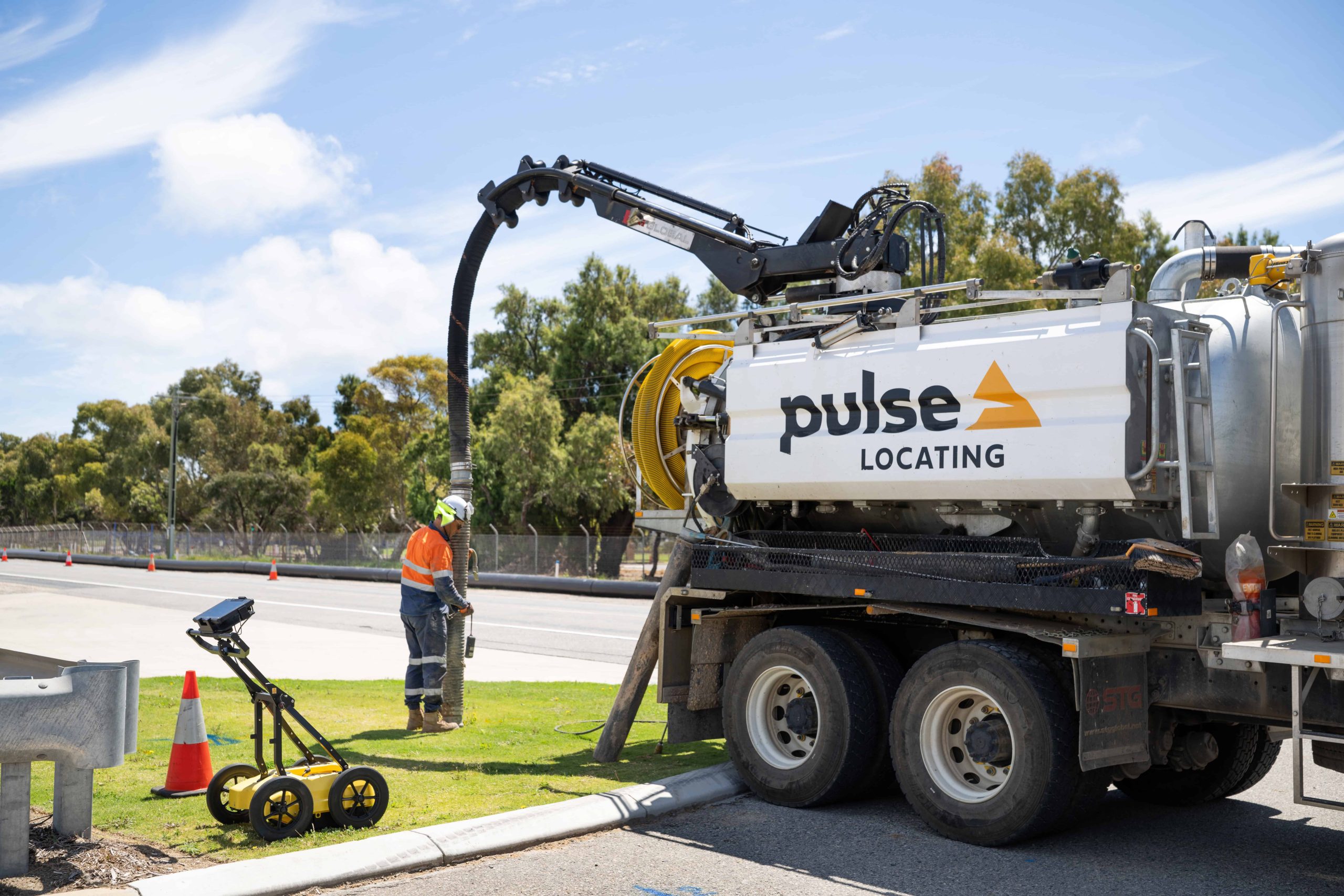
Perth is busy underground. Beneath every road, verge and project site sits a network of gas mains, water pipes, power cables, fibre optic lines and telecommunications conduits. Some are mapped accurately. Many are not. As infrastructure projects across the metro area grow in scale and density, the way crews dig has had to change.
Mechanical excavation around live assets is no longer the default. Vacuum excavation is. Across civil, utility and government works in Perth, it has quietly become the standard approach, and for good reason.
Key Takeaways
- Perth’s underground is increasingly congested, making accurate, non-destructive digging essential on most infrastructure projects.
Vacuum excavation uses high-pressure water and a vacuum system to expose services without mechanical impact, removing the guesswork that comes with traditional digging. - Major Perth clients and asset owners now expect documented visual verification of services before plant moves in, supported by accredited safety systems like ISO45001 and ISO9001.
- The hourly rate looks higher than mechanical excavation, but total project cost is almost always lower once avoided strikes, rework and downtime are factored in.
- Vacuum excavation works best when paired with ground penetrating radar, potholing and gas supervision as part of an integrated subsurface utility approach.
- Engaging a locating partner early in the planning stage protects programme, budget and compliance outcomes.
The Underground is Getting More Crowded
Perth’s growth corridors, METRONET works, road upgrades and new estate developments all share one challenge. The ground is full. Decades of utility installations sit layered beneath each other, often without precise records. Recent works might be well documented, but older assets can be off by metres rather than centimetres.
When a project team commits to a programme, the last thing anyone wants is an unplanned service strike. A single damaged gas line or fibre cable can stop a job for days, trigger emergency response procedures and pull a contractor into a difficult conversation with the asset owner. The cost of one strike usually exceeds the cost of doing the job properly from the start.
That reality is why vacuum excavation has shifted from a specialist service to standard practice on most Perth infrastructure jobs.
What is Driving the Shift
Three things have moved vacuum excavation from optional to expected on Perth sites.
- Tighter compliance and duty of care. Principal contractors and asset owners now expect documented evidence that services have been visually verified before mechanical plant moves in. Before You Dig Australia (formerly Dial Before You Dig) data is a starting point, not the final word. Verified visual confirmation through non-destructive digging is what closes the gap.
- Safety expectations from clients and regulators. Major clients including Water Corporation, Western Power, Main Roads WA and local government bodies all favour contractors who can demonstrate accredited safety systems and non-destructive methods. Pulse Locating works under ISO45001 and ISO9001 systems, which is increasingly a baseline requirement rather than a differentiator.
- Total project outcomes, not hourly rates. Project managers in Perth have learnt to look past the hourly rate. Vacuum excavation may cost more per hour than a wheeled excavator, but it almost always costs less per project once you account for avoided strikes, rework, downtime and reinstatement.
How Vacuum Excavation Actually Works
The method itself is straightforward. High-pressure water breaks up the soil in a targeted area. A powerful vacuum system simultaneously lifts the spoil into a sealed tank. There are no buckets tearing through the ground. No blind digging. No guesswork.
The result is a clean, controlled excavation that exposes services without mechanical impact. Operators maintain constant visual control of what is coming out of the ground, which means the depth, alignment and condition of every asset can be confirmed before further works begin.
It pairs well with other subsurface utility detection methods like ground penetrating radar and electromagnetic locating. GPR and electromagnetic tools tell you where services likely are. Vacuum excavation confirms it.
Where it Fits on Perth Projects
Vacuum excavation is now the go-to method across a range of Perth project types.
On rail and road corridors, where tolerance for service disruption is near zero, vacuum excavation is used to expose services ahead of trenching, boring or piling works. On utility upgrade projects, potholing services are used to verify depth and alignment of existing assets before tie-ins. In service-congested CBD and inner-suburb sites, it is often the only safe way to work around legacy infrastructure.
It is also the preferred method for footings, post holes and targeted excavations where precision matters more than speed. Telecommunications, gas and high voltage power providers in particular treat vacuum excavation as standard practice when working anywhere near their assets.
For projects involving live high-pressure gas networks, vacuum excavation is paired with high pressure gas supervision to provide a layered approach to risk that satisfies both the asset owner and the principal contractor.
The Risk Argument is the Strongest One
Mechanical excavation introduces uncertainty. Vacuum excavation reduces it. That is the core of the argument and it has held up across every project type Pulse Locating supports.
When services are exposed visually before plant moves through an area, the likelihood of asset damage drops sharply. So does the risk to operators, site crews and the public. Insurance and indemnity exposure shrinks. Programme certainty improves. The relationships between contractors, asset owners and clients stay calm rather than combative.
Good information prevents problems. That is the principle behind the method, and it is why vacuum excavation has earned its place as the standard.
What it Means for Perth Project Teams
If you are planning works around buried services in Perth, the question is no longer whether to use vacuum excavation. It is how to integrate it efficiently into the programme.
That usually means engaging a locating partner early, not at the last minute. Scoping the number of exposure points, ground conditions and access constraints before mobilisation keeps cost and timeframe predictable. Working with a team that combines locating, GPR and vacuum excavation under one roof reduces the number of subcontractors on site and keeps responsibility clear.
Pulse Locating supports civil contractors, utility providers and infrastructure teams across a range of notable projects in Perth and regional WA. The team brings vacuum excavation, ground penetrating radar, potholing and gas supervision together as one integrated service rather than separate line items.
Get the Job Started Right
Vacuum excavation has become the standard for Perth infrastructure projects because it works. It is safer, more accurate, more defensible from a compliance perspective and cheaper across the life of a project. The hourly rate is not the headline. The outcome is.
If you have a project coming up that involves works around buried services, get in touch with the Pulse Locating team to scope it properly. A short conversation early in the planning stage usually saves a long one later on.